WIP Modernize · Engineering project
Modernize your legacy system in phases, with tests and a way back
WIP Modernize updates systems that have aged: refactoring, version and dependency upgrades, language or framework migration, and custom software development when it makes sense. The work is split into phases, each with its own tests and rollback strategy, so the system keeps serving users while it changes.
Updated on
How does phased modernization work?
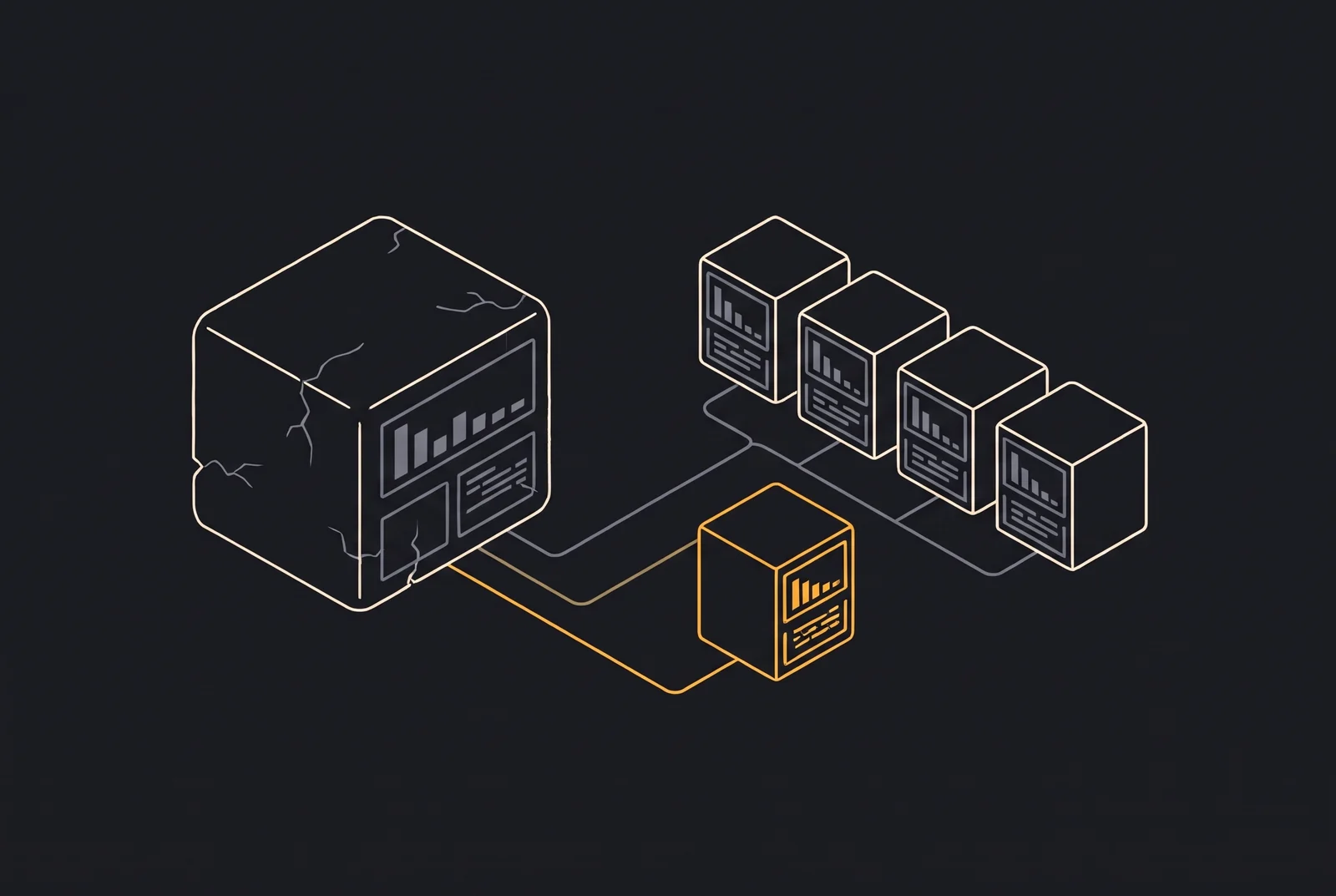
Phased modernization replaces one big, risky cutover with several smaller changes, each one tested and with a way back. The system keeps serving users while it changes, and each phase delivers value on its own.
Before the first phase, we map the current system: what it does, which parts are critical, which dependencies are no longer supported, and where the risks are. The sequence of phases comes out of that map.
Each phase has:
- A clear goal, such as upgrading the framework version or splitting off a critical module.
- Tests that show the behavior stays the same wherever it should.
- A rollback strategy, defined before the change, not after the problem.
- A completion criterion, so everyone knows when the phase is done.
- Its own scope and price, which makes it possible to stop, adjust, or change priorities between one phase and the next.
A well-known technique, often called the strangler fig pattern, is to replace the old system gradually: the new part takes over one function at a time, while the rest stays on the old code, until the old system can be switched off. That way, a problem in the new part affects only that function and can be rolled back without taking down everything else.
The result of each phase is documented, so whoever maintains the system understands what changed and why.
How do you decide what to modernize first?
Start with what combines the most risk with the most value: parts without security support, parts that change often, and parts that hold back the growth of the business. Modernizing what is stable and rarely changes is seldom worth it.
A practical way to prioritize is to cross two questions:
| Situation | Rarely changes | Changes often |
|---|---|---|
| High risk (unsupported, untested, recurring failures) | Stabilize and protect | Top priority |
| Low risk | Leave as is | Improve with each change |
Also factor in:
- Unsupported versions of the language, framework, database, or operating system, which no longer receive security fixes.
- Abandoned dependencies, with no active maintenance.
- Concentrated knowledge: parts that only one person understands.
- Cost of change: simple features that take weeks because of how the code is structured.
Prioritization is done together with the people who know the business, because technical risk only makes sense next to business impact: a failure in billing weighs more than a failure in a report nobody opens. WIP Check can serve as a starting point.
What is a rollback strategy?
A rollback strategy is the plan, defined before each change, for returning to the previous state if something goes wrong. It says how to go back, how long that takes, and what happens to the data created in the meantime.
In a modernization project, rollback is what makes it safe to change. Without it, every phase is a gamble; with it, a problem becomes a delay, not a disaster.
A good rollback strategy answers three questions:
- How do you roll back the code? Usually by redeploying the previous version through the same deployment process.
- How do you roll back the data? This is the hard part. Database changes need to stay compatible with the previous version during the transition, or have a tested procedure for going back.
- Who decides to roll back, and based on what? Criteria agreed in advance, such as a rise in the error rate or a failure in a critical function, prevent a debate in the middle of the incident.
Techniques such as feature flags, which turn the new part on and off without a new deployment, and running the old and new systems in parallel help reduce the risk. The right combination depends on each phase and goes into the plan before execution.
What does WIP Modernize deliver?
- A map of the current system, with its risks and critical dependencies.
- A phased plan, with a goal, tests, and a rollback strategy for each phase.
- Refactoring and upgrades to versions, libraries, and infrastructure.
- Language or framework migration, when justified.
- Custom software development, when the problem calls for something new.
- Automated tests covering the parts that changed.
Who is WIP Modernize for?
- Businesses with legacy systems that run their operations and can't simply be shut down.
- Applications stuck on unsupported versions of a language, framework, or database.
- Teams that need help migrating without stopping feature delivery.
What is not included in WIP Modernize?
- Trend-driven modernization: every change has to solve a real problem or reduce a concrete risk.
- A full rewrite delivered all at once, with no phases and no way back.
- Software licenses, infrastructure, and third-party services.
How much does WIP Modernize cost?
WIP Modernize is quoted after a technical assessment. It's a phased project: each phase has its own scope, tests, rollback strategy, and price, based on the size of the system. Infrastructure, licenses, and third-party services are paid for separately.
Frequently asked questions about WIP Modernize
Is it better to rewrite the system or modernize it gradually?
It depends on the state of the system and how much risk the business can accept. Rewriting everything at once concentrates the risk in a single cutover. Modernizing in phases lets you validate each step and roll back if something goes wrong. The recommendation comes out of the technical diagnosis, with the pros and cons of each path.
How much does it cost to modernize a legacy system?
WIP Modernize is contracted phase by phase. Each phase has its own scope, tests, rollback strategy, and price, set according to the size and condition of the system. Infrastructure, licenses, and third-party services are charged separately.
Does the system go offline during modernization?
The goal is that it doesn't. Phases are planned to coexist with the system in operation, and every change has a tested way back. When a step requires a maintenance window, it's agreed on in advance.
Does WIP build software from scratch?
Yes, when the problem calls for something new. Custom development is part of WIP Modernize and follows the same rules: phased scope, tests, rollback strategy, and documentation.
Related services
Technical diagnosis
WIP Check
You don't know if your system is secure, if your backups work, or where to start improving it.
starting at US$ 150
Troubled software
WIP Rescue
The system crashes, slows down, or keeps costing more, and nobody knows exactly why.
starting at US$ 470
Managed operations
WIP Managed
Your systems run the business, but nobody is there to oversee them, plan ahead, and make changes safely.
starting at US$ 470 per month
Start with a diagnosis
Before investing in changes, understand the risks, bottlenecks and waste in your system. WIP Check delivers an executive report and a prioritized action plan.