WIP for Creators
From an AI-built prototype to a product ready for real users
For people who built a product with AI, no-code tools, or their own code and now need it to work for real users. WIP handles what a prototype leaves out: secrets, database, backups, domain, deployment, monitoring, and costs, explaining every decision without requiring you to master the technical terms.
You built your software. We help you bring it into the world safely.
Updated on
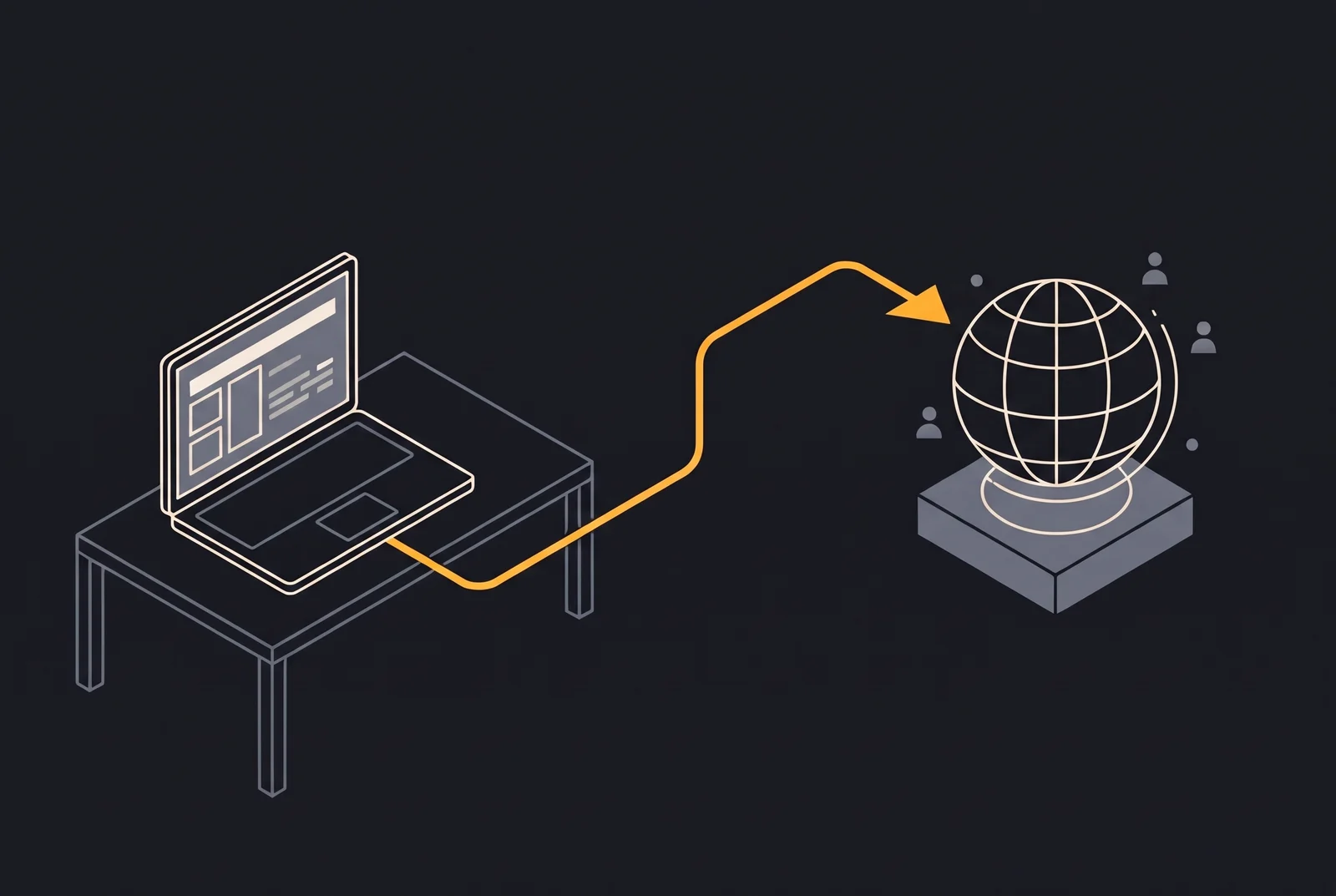
What problems does WIP solve for software creators?
- The app works on your computer, but you don't know how to put it online safely.
- You're not sure whether the AI-generated code exposes passwords or keys.
- There's no tested backup, and a failure could erase your first customers' data.
- Hosting and API bills can grow without warning once users arrive.
- When something breaks, you find out from your users.
Can AI-built software go to production?
Yes, as long as it goes through the same checks as any other software: secrets kept out of the code, data access rules, tested backups, repeatable deployment, and monitoring. The tool used to build it isn’t the problem; what hasn’t been checked is.
Assistants like Claude Code, Codex, and Cursor, and platforms like Lovable and Bolt, speed up building a lot. They build what you ask for, and almost nobody asks for “set up backups with restore testing” or “check whether the database key is exposed in the browser.” That’s why it pays to look closely at the parts that don’t show up on screen:
- Keys and passwords left in the code or sent to the browser.
- Database access rules that let one user read another user’s data.
- Development settings still active in production, such as detailed error messages.
- Dependencies installed without review, some with known vulnerabilities.
- Missing backups, or backups that have never been restored.
None of this, on its own, means redoing the project. These are fixes that a diagnosis finds and a well-executed launch resolves.
The From Code to Production checklist lists every item along with how to check it, and you can use it on your own before deciding whether you need help.
What changes when the first users arrive?
When real users arrive, your software starts storing other people’s data, is expected to work when they need it, and generates costs every month. Mistakes are no longer just yours: they become a problem for the people who trusted your product.
In practice, three things change at once.
Responsibility for data
Names, emails, payments, documents: from the first sign-up, you’re responsible for what you store. Brazil’s data protection law (LGPD), for example, applies to small businesses too, and a loss or leak of data damages trust in the whole product.
Expectation of uptime
People who pay expect the system to be up. Without monitoring, an outage is discovered through a customer complaint, sometimes hours later.
Recurring costs
Hosting, database, email, AI APIs: each service has its own bill, and some grow with usage. Without spending limits and budget alerts, a traffic spike or a bug stuck in a loop can turn into an unexpected invoice.
None of these changes is a reason to delay the launch. They’re reasons to launch on the right foundation: protected data, alerts in place, and costs planned ahead. That’s what WIP Launch delivers, with documentation so you understand what was done.
Do I need to understand infrastructure to make the decisions?
No. You need to understand the consequences of each option, and WIP explains them in plain language: what it costs, what it protects, and what the risk of not doing it is. The decision stays yours; the jargon stays with us.
The decisions that come up when you launch a product are few and concrete:
| Decision | What you need to know to decide |
|---|---|
| Where to host | Estimated monthly cost, ease of operation, and how much the cost grows with usage |
| How much to invest in backups | How much data you can afford to lose and how long you can be offline |
| Who receives the alerts | Who can act if the system goes down, and at what hours |
| Whether to stay on the platform where you built it | What you gain in control and what you pay in work and cost if you move |
WIP has no preferred provider. The recommendation might be a simple virtual private server (VPS), Cloudflare, AWS, Google Cloud, Azure, or keeping the project where it is, if that serves the product. What guides the choice is your situation.
We also recommend keeping the domain, accounts, and repository in your name. That way, you can stay with WIP, take over operations, or switch providers without losing anything you’ve built.
Most relevant services
Technical diagnosis
WIP Check
You don't know if your system is secure, if your backups work, or where to start improving it.
starting at US$ 150
Troubled software
WIP Rescue
The system crashes, slows down, or keeps costing more, and nobody knows exactly why.
starting at US$ 470
Deploy to production
WIP Launch
Your software works on your computer, but you don't know how to launch it safely and without surprises.
starting at US$ 470
Maintenance and monitoring
WIP Care
The system is live, but nobody keeps regular track of backups, updates, and alerts.
starting at US$ 185 per month
Frequently asked questions
Do I need to know how to code to hire WIP?
No. Recommendations and reports are written in plain language, and every technical decision comes with its reason and cost. You decide based on what matters for your product.
Does WIP work with software built with Lovable, Bolt, Cursor, or Claude Code?
Yes. AI and no-code tools speed up building, and WIP takes care of what comes next: security, database, backups, deployment, monitoring, and costs. The starting point is understanding how the project was built and where it runs today.
Where do I start?
If the product isn't live yet, WIP Launch handles getting it live. If it's already live and you want to know the risks, start with WIP Check, the technical diagnosis. If there's already a concrete problem, such as slowness or outages, the way forward is WIP Rescue.
Will I be locked into WIP later?
No. We recommend keeping the domain, cloud accounts, and repository in your name, and every deliverable comes with documentation. You can continue with WIP, take over operations yourself, or move to another provider.
Start with a diagnosis
Before investing in changes, understand the risks, bottlenecks and waste in your system. WIP Check delivers an executive report and a prioritized action plan.